|
|
|
Court upholds Md. gay marriage ban
Law Center |
2007/09/20 03:13
|
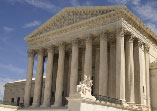
| Maryland's highest court Tuesday rejected same-sex marriage and upheld the state's 34-year-old statute defining marriage as a union between a man and a woman. In a case watched closely around the nation, the Maryland Court of Appeals' 4-3 ruling dealt a blow to gay and lesbian advocates who launched their fight to overturn the state's marriage law three years ago. Tuesday, those advocates pledged to take the battle for marriage to the General Assembly, where two lawmakers have already vowed to sponsor legislation to legalize same-sex marriage. Opponents of same-sex marriage applauded Tuesday's 240-page decision, calling it a victory for traditional families and noting that most appellate courts in other states have reached similar conclusions. They also promised to mount a legislative effort of their own, vowing an aggressive push to explicitly ban same-sex nuptials in the state Constitution. The court's majority opinion rejected the plaintiffs' claim that the 1973 statute discriminates on the basis of gender. In addition, the court concluded that while marriage is a fundamental right, it is not a right extended to gays and lesbians under current state law. Within hours of the decision, many of the same-sex couples who had served as plaintiffs in the legal challenge gathered out side a Bolton Hill church to express anger and disappointment with the court's ruling. Lisa Polyak and her partner of 25 years, Gita Deane, the lead plaintiffs, said they would keep fighting for legal protections for their 11- and 8-year-old daughters -- security they said would only be guaranteed through marriage. "I feel like this decision is needlessly cruel to gay and lesbian families," said Polyak, speaking through tears during a news conference at Brown Memorial Church. "I wish these judges would have to face our children today because I have to." David Rocah, staff attorney for the ACLU of Maryland and one of the lawyers representing the plaintiffs, said that the decision, while disappointing, did not mark the end. "This is not the first time that the courts have not gone our way in this and other civil rights battles and it won't be the last time," he said. "I believe the march of history in this country is indeed a march toward justice." Though the majority opinion rejected same-sex marriage, lawmakers who have for years made unsuccessful attempts at barring the unions in Maryland's Constitution said a ban was needed now more than ever. "I assure you the constitutional marriage amendment will be reintroduced this session," said Del. Donald H. Dwyer Jr., an Anne Arundel County Republican and leading same-sex marriage opponent in the House. "Without it, there's nothing to preclude a future legal challenge made on a different argument or a different basis. The legislature ought to have the courage and the desire to publicly vote on the issue of marriage." Since Massachusetts became the first -- and remains the only -- state to allow gays and lesbians to wed in 2003, an explosive debate over same-sex marriage has played out in courts and state capitals nationwide. Cases are pending in California and Vermont, but Maryland had been eyed as a bellwether state because of its strong liberal leanings. Twenty-seven states have voted to ban same-sex marriage in their constitutions, while a handful -- Vermont, Connecticut, New Jersey and New Hampshire -- have adopted civil unions, which confer some of the rights of marriage. Maryland's journey to the national spotlight began in July 2004, when 19 gays and lesbians filed a lawsuit in Baltimore Circuit Court challenging the 1973 statute. In January 2006, Baltimore Circuit Court Judge M. Brooke Murdock held that the law was unconstitutional and discriminatory. The Attorney General's Office immediately appealed the decision. Last December, the Court of Appeals heard arguments. The bitterly divided court was passionate in its opinions, with four judges supporting the majority, two penning dissents and one concurring in part and dissenting in part. In the majority opinion, Judge Glenn T. Harrell Jr. wrote that the state has a legitimate interest in promoting opposite-sex marriage. But he also reminded lawmakers that they have the right to consider a law permitting same-sex marriages. "In declaring that the State's legitimate interests in fostering procreation and encouraging the traditional family structure ... our opinion should by no means be read to imply that the General Assembly may not grant and recognize for homosexual persons civil unions or the right to marry a person of the same sex," he said. Harrell was joined by judges Dale R. Cathell, Clayton Greene Jr. and Alan M. Wilner. Judge Irma S. Raker concurred in part and dissented in part. Chief Judge Robert M. Bell and Lynne A. Battaglia wrote dissenting opinions. The majority opinion rejected the plaintiffs' claim that denying gay marriages is a form of sex discrimination. In fact, sex discrimination does not apply to individuals, only to groups, the court stated. "The court was unusually clear in choosing the side that sex discrimination is only from the point of view of the group," said Julie Shapiro, an associate professor at the University of Seattle School of Law. While Washington's highest court reached a similar conclusion in that state's same-sex marriage case, it did not articulate it so clearly, she said. "The court seems to be saying that discriminating because someone is lesbian or they are gay is not as big of a problem," she said. While the court recognized that gays and lesbians face discrimination, it also notes that as a group they are not "politically powerless," and therefore not entitled to protections. "It is clear that homosexual persons, at least in terms of contemporary history, have been a disfavored group in both public and private spheres of our society," the decision reads. "This court nevertheless finds that a history of unequal treatment does not require that we deem suspect a classification based on sexual orientation." "I don't think that's true," said Jana Singer, a law professor at the University of Maryland who was among the 58 professors from the University of Maryland and University of Baltimore law schools who filed friend-of-the-court briefs supporting the plaintiffs. "I think the fact that same-sex couples are excluded form the hundreds of protections of marriage indicates they are not politically powerful." In his dissenting opinion, Bell said the majority underestimates the societal barriers facing gays and lesbians. He compared denying them the right to wed to the bans on interracial marriage, which were struck down 40 years ago in the landmark U.S. Supreme Court case Loving v. Virginia. "To be sure, there are important differences between the African American experience and that of gay men and lesbians in this country, yet many of the arguments made in support of the antimiscegenation laws were identical to those made today in opposition to same-sex marriage," Bell wrote. In her dissent. Battaglia said her fellow judges offer no "principled basis" for denying the plaintiffs' sex discrimination claim. "In reaching this result, the majority breathes life into the corpse of separate but equal," she wrote. Raker, meanwhile said she fa vored decision similar to that of New Jersey's highest court, which last year required the state to extend the rights and benefits of marriage to gay couples within 180 days, but left it up to the state legislature whether to call such unions "marriage." The court's ruling -- coming on the heels of similar conclusions reached by the high courts of many other states -- suggests that advocates of same-sex marriage are going to need to turn to legislative action, said Carl Tobias, the Williams Professor at the University of Richmond School of Law. |
|
|
|
|
|
|
Measures To Curb Emissions Backed
Law Center |
2007/09/14 11:34
|
In a crucial ruling on the global warming issue, a federal judge said Wednesday that regulations adopted by Connecticut and 12 other states to curb greenhouse gas emissions from cars and light trucks don't conflict with federal law. Judge William K. Sessions III, of U.S. District Court in Burlington, Vt., ruled against the auto industry on every point in its attempt to block implementation of the rules, which are aimed at reducing global warming.
Although witnesses for both the auto industry and proponents of the regulations testified that the rules would have only a tiny impact on global temperatures, Sessions said that was no reason not to implement them.
"The fact that global warming will not be solved by changes in any one industry or by regulation of any one source of emissions in no way undercuts the vital nature of the problem or the validity of partial responses," he wrote. "Rather, it points to the necessity of responses, however incomplete when viewed individually, on any number of fronts."
Sessions discounted the automakers' claims that complying with the regulations would be technologically and economically unfeasible. "It is improbable that an industry that prides itself on its modernity, flexibility and innovativeness will be unable to meet the requirements of the regulation," he wrote.
Wednesday's decision was the second federal court victory in recent months for states and environmental groups trying to use federal anti-pollution laws to reduce emissions of carbon dioxide and other gases that cause global warming. In April, the U.S. Supreme Court ruled that the Environmental Protection Agency has a duty to consider whether the gases are harmful air pollutants.
It is unlikely to be the last word, however. Sessions' ruling could be appealed. Similar lawsuits are pending in two other states, and the EPA is now weighing approval of the regulations that were the subject of Wednesday's decision.
The case before Sessions involved regulations established in California in 2004 and later adopted by 12 other states, including all of New England except New Hampshire. The regulations would limit greenhouse gas emissions from cars, SUVs and light trucks beginning with the 2009 model year.
The rules were established under a provision of the federal Clean Air Act that allows California to set more stringent standards for vehicle tailpipe emissions, subject to EPA approval, and permits other states to adopt the California standards.
Automakers, however, sued California, Vermont and Rhode Island to block implementation of the rules, claiming they violate another set of federal laws concerning vehicle mileage. The Vermont case was the first to go to trial, with several environmental groups joining the state as defendants.
The manufacturers argued that the rules amount to mileage standards, which states cannot impose under federal law. That's because emission of carbon dioxide, the principal greenhouse gas, is directly related to the amount of gasoline burned. To reduce carbon dioxide emissions, therefore, manufacturers would have to increase vehicle mileage.
Even if the regulations aren't explicitly pre-empted by federal law, industry lawyers argued, they are contrary to the intent of the law - to spare manufacturers the burden of meeting different mileage standards in different states. Their witnesses said that the industry lacks the technology to meet the requirements, that compliance would add about $6,000 to the cost of a vehicle, and that automakers would be forced to stop selling most of their products in states that adopt the rules.
Sessions rejected the claim that the regulations are really mileage rules. Improving mileage is one way to reduce emissions, he said, but not the only way: Carmakers can get credit for improving air-conditioner efficiency, for example. Nor is better mileage alone sufficient: The California standards also require calculation of the emissions caused by the production of alternative fuels, such as ethanol, propane or natural gas.
And Sessions said he was not persuaded by witnesses who testified that the industry would be unable to comply with the regulations, saying they made overly conservative assumptions about the availability of technology and alternative fuels. Although witnesses testified that alternative fuels would not help automakers meet the regulations, Sessions wrote, top industry executives have publicly touted the use of those fuels as part of their strategies to reduce greenhouse gases. Similarly, he wrote, some technologies dismissed by witnesses as not practical are already in use.
In response to Wednesday's ruling, the lead plaintiff, the Alliance of Automobile Manufacturers, issued a brief statement in the name of president and CEO Dave McCurdy reiterating the Alliance's position and saying it is "studying the decision and considering the options, including an appeal."
The winners were more voluble. Massachusetts lawyer Matt Pawa, who represented several of the intervening environmental organizations, said Sessions had "given extraordinarily thorough consideration to all of the automakers' factual and legal arguments and rejected virtually all of them."
"The automakers have now had their day in court and they've lost," he said. "This a historic win for the planet." |
|
|
|
|
|
|
Court upholds tough Vermont auto emissions law
Law Center |
2007/09/13 06:51
|
| District Court in Vermont on Wednesday upheld a state law that calls for a 30 percent reduction in the amount of carbon dioxide, a greenhouse gas, emitted by cars and certain light trucks. In his decision, Judge William K. Sessions found that the Vermont law -- which regulates greenhouse gas emissions -- did not conflict with federal regulations on fuel economy. "The plaintiffs failed to prove the regulations were preempted," Sessions wrote in his decision. Automakers General Motors Corp. and DaimlerChrysler AG -- which has since sold its Chrysler unit -- sued in 2005 to block the law, arguing that states do not have the authority to regulate the amount of CO2 released by cars, which is closely related to fuel economy. Vermont is one of nearly a dozen states that followed California's lead in adopting the strict standard, which is tougher than federal rules and is intended to reduce the rise in global temperatures and changing weather patterns associated with greenhouse gas emissions. The automakers argued that they could not meet the new standards, and in court testimony said they would have to pull out of the state as a result.
|
|
|
|
|
|
|
Hearing on Craig’s Guilty Plea Is Set for Sept. 26
Law Center |
2007/09/11 11:04
|
| Senator Larry E. Craig’s request to withdraw his guilty plea in an airport sex sting will be heard on Sept. 26, four days before he has said he will leave the Senate. A spokesman for Mr. Craig, Republican of Idaho, said he was unlikely to try to finish his third term unless Hennepin County District Court moved quickly to overturn the conviction. Mr. Craig has been under pressure from fellow Republicans to resign. The hearing will be before Judge Charles A. Porter, rather than Judge Gary Larson, who had accepted the plea. That could help Mr. Craig’s lawyers, who are arguing, in effect, that Judge Larson erred in accepting the plea. It is not known whether Mr. Craig will appear, said Judy Smith, a spokeswoman for Billy Martin, a lawyer for Mr. Craig. Mr. Craig was arrested on June 11 by an airport police officer and pleaded guilty to misdemeanor disorderly conduct. In exchange, prosecutors dropped a gross misdemeanor charge of interference with privacy. Mr. Craig has since said his plea was a mistake. He filed a request on Monday to withdraw it. |
|
|
|
|
|
|
High court takes up death penalty for retarded
Law Center |
2007/09/10 09:56
|
A man who has been on Georgia’s death row for most of his life should not be executed because he is mentally retarded, the defendant’s lawyer told the state Supreme Court Monday.
But a Floyd County prosecutor said IQ tests show that James Randall Rogers, 46, of Rome does not meet the standard of “significantly subaverage” intelligence required by state law to exclude a convicted killer from capital punishment.
Rogers was convicted and sentenced to death for murdering Grace Perry, his 75-year-old neighbor, with a rake handle in 1980, when he was 19. He also was sentenced to 10 years for aggravated assault for attacking the victim’s 63-year-old cousin.
In 1988, Georgia became the first state to prohibit the death penalty for defendants who are mentally retarded. Then in 2002, the U.S. Supreme Court held that executing the mentally retarded is unconstitutional.
At issue in Monday’s hearing was an appeal filed on Rogers’ behalf after a 2005 trial in which a jury found that he is not mentally retarded.
The state’s witnesses at the trial included a professional counselor who administered an IQ test to Rogers. He answered a number of questions correctly, including naming the U.S. president during the Civil War and the population of the Earth.
“The answers on that test indicate that Mr. Rogers is not that much below average,” said Martha Jacobs, chief assistant district attorney for the Rome Judicial Circuit.
Jacobs said Rogers is a voracious reader and has used the law library at the state prison in Jackson to do research on his case.
In fact, shortly after the General Assembly banned executing the mentally retarded, Rogers wrote letters waiving his right to a competency trial. In one letter, he argued that it would be a waste of tax money because he has an IQ of 85.
One generally accepted indication of subaverage intelligence is scoring below 70 on IQ tests.
However, the case went forward after the state Supreme Court ruled that a defendant in such cases can not waive his or her right to a competency trial.
On Monday, Rogers’ lawyer, Ralph Knowles Jr., said his client suffers from a “severe organic brain injury” that has impaired his mental functioning since childhood.
Knowles suggested that the court broaden the state’s standard for mental retardation to include such a brain injury and not rely strictly on IQ scores to decide whether a defendant should be executed.
“Surely, this state cannot determine life or death based on whether a person’s scores are two points below standard deviation,” he said.
Knowles also accused the state of violating Rogers’ due-process rights and argued that those technical violations alone would be enough for the court to vacate his death sentence.
Knowles said the trial judge refused to allow one of the lawyers Rogers had chosen to speak for him in court, and he charged that the counselor who administered the IQ test to his client and then testified about the results was not qualified as an expert witness.
“His testimony is not believable,” Knowles said. “The state would have you believe that Mr. Rogers somehow got smarted up sitting there on death row.”
Jacobs said the lawyer who wasn’t allowed to speak for Rogers during the trial did participate in other aspects of his defense, including filing briefs.
Jacobs also defended the expert witness as a trained “psychometrist,” a specialist in psychological testing, who found Rogers both articulate and with an excellent short-term memory. |
|
|
|
|
|
|
Court allows Morrison to intervene in abortion case
Law Center |
2007/09/05 06:33
|
| Attorney General Paul Morrison is now a party to a lawsuit filed against his predecessor by an abortion clinic's operator. The Kansas Supreme Court has allowed Morrison to intervene in the case. It was filed with the court in June by Planned Parenthood of Kansas and Mid-Missouri. The group is targeting former Attorney General Phill Kline, now the Johnson County District Attorney. Its clinic in Overland Park falls within Kline's jurisdiction, and he investigated it while attorney general. The court's order was filed under seal, like all other documents in the case. There has been no public explanation of why Planned Parenthood is suing Kline or why Morrison wants to intervene. |
|
|
|
|
|
|
New attorney general has rebuilding ahead
Law Center |
2007/09/04 09:20
|
| Whoever replaces Attorney General Alberto Gonzales will face a daunting challenge. Charges of cronyism and partisan politicking have sunk the Justice Department's reputation to levels not seen since Watergate and damaged the Bush administration's ability to fight crime, pursue the war on terrorism and achieve its other goals, current and former department officials said. President Bush has downplayed the criticism of Gonzales as political mudslinging, but if he selects a new attorney general who seeks to restore the department's independence and professionalism, he could repair the damage before the end of his administration, said officials who have served both Republican and Democratic administrations. Restoring the department's reputation also could give the administration more elbowroom to pursue its own agenda. "The Justice Department needs to be depoliticized," said Guy Lewis, who oversaw the U.S. attorneys' offices under former Attorney General John Ashcroft. "Loyalty to the president is a wonderful thing, but it can't be the be-all and end-all." For the most part, Justice Department lawyers said, the scandal did little to disrupt the day-to-day prosecution of cases. But Gonzales' handling of the firings of nine U.S. attorneys and his subsequent shifting testimony damaged morale and the public's perception of a politically impartial Justice Department. The department's standing was especially hurt by revelations that Gonzales' aides had screened job applicants based on their political credentials and by allegations that they had pressured Justice Department lawyers who were overseeing politically sensitive cases, current and former officials said. Adding to the concern about the department's ability to remain impartial, Gonzales changed policy in a way that allows White House officials unprecedented access to information about pending criminal and civil cases. When Congress confronted him about the change, he testified that he, too, was concerned when he realized the possible effect. Gonzales appears to have had little sense of the inner workings of his own department, some lawyers said. When he was told that budget cuts meant that U.S. attorneys would be filing fewer cases, Gonzales turned to aides and asked, "When were you going to tell me this?" people familiar with the meeting said. Paul Charlton, one of the Republican-appointed U.S. attorneys whom Gonzales fired, recalled that the attorney general raised eyebrows when he spoke at an annual meeting with U.S. attorneys about what he saw as the department's mission. "He told us to remember that we work for the president," Charlton said. "Many of us, particularly the career people, were taken aback by that. Yes, we serve at the pleasure of the president. But we work for the people, not just the president." Gonzales attempted to exert tight control over the U.S. attorneys' offices, unlike prior Republican administrations, which had worked to ensure that their top prosecutors had greater independence. The attorney general and his aides pushed department lawyers in the field to carry out the president's priorities, sometimes to the detriment of local needs. "It's OK to tell a U.S. attorney that they're not cutting the mustard because they're not prosecuting immigration cases," said Bill Mateja, a former federal prosecutor in Texas and a former senior counsel under Ashcroft. "But it's not OK to bring politics to bear, and in some cases it appears there was more of a focus on the politics and less of a focus on actually fulfilling the president's initiatives." |
|
|
|
|
|
|
Class action or a representative action is a form of lawsuit in which a large group of people collectively bring a claim to court and/or in which a class of defendants is being sued. This form of collective lawsuit originated in the United States and is still predominantly a U.S. phenomenon, at least the U.S. variant of it. In the United States federal courts, class actions are governed by Federal Rules of Civil Procedure Rule. Since 1938, many states have adopted rules similar to the FRCP. However, some states like California have civil procedure systems which deviate significantly from the federal rules; the California Codes provide for four separate types of class actions. As a result, there are two separate treatises devoted solely to the complex topic of California class actions. Some states, such as Virginia, do not provide for any class actions, while others, such as New York, limit the types of claims that may be brought as class actions. They can construct your law firm a brand new website and help you redesign your existing law firm site to secure your place in the internet. |
Law Firm Directory
|
|


 Legal News RSS Feed