|
|
|
Pricing rules divide high-court justices
Breaking Legal News |
2007/03/27 08:52
|
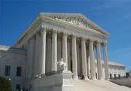
| Consumer protection collided with modern economic theory yesterday as the Supreme Court wrestled with a 96-year-old standard intended to promote competition. At issue is a 1911 Supreme Court ruling that is based on an assumption that any agreement between a manufacturer and stores to set minimum retail prices for products is almost always anti-competitive. Not so, said Washington attorney Theodore Olson, representing a manufacturer of women's accessories. The idea that such agreements are automatically illegal is "outdated, misguided" and the restriction itself is anti-competitive, Olson argued. The case stands at the intersection of discount chains and such niche retailers as Kay's Kloset in Texas, which lowered its prices below an agreed-upon minimum with manufacturer Leegin Creative Leather Products Inc. Leegin cut off its shipments to the family owned business when Phil and Kay Smith refused to raise their prices. Leegin said that by maintaining price consistency among its retailers, stores can offer improved customer service. The extra service, said the manufacturer, enables smaller stores to compete against rival brands sold by bigger cut-rate competitors. If the old standard is abandoned, what about the argument that every American will pay far more, asked Justice Stephen Breyer. Representing the Bush administration, Deputy Solicitor General Thomas Hungar said that there is a consensus among economists that such agreements are not necessarily anti-competitive. Consumers "want other things besides cheap," said Justice Antonin Scalia. Some consumers prefer more service at a higher price, said Scalia, and the fact that such price-floor agreements might raise prices "does not prove anything." The Smiths successfully sued Leegin, and the 5th U.S. Circuit Court of Appeals affirmed the jury's finding that Leegin and its retailers agreed to fix retail pric-es on the manufacturer's Bright-on brand. If Leegin can get the 1911 Supreme Court ruling overturned, it would be much more difficult for the Smiths to prevail because they would have to show that the Leegin agreement is anti-competitive.
|
|
|
|
|
|
|
Virginia's Governor Vetoes Bills On The Death Penalty
Breaking Legal News |
2007/03/27 08:48
|
Virginia Governor Timothy M. Kaine announced Monday that he has vetoed five bills promoting the death penalty. House Bill 2750 and House Bill 2347 sought to make the murder of a judge and the murder of a witness in a criminal case, respectively, into capital crimes; Senate Bill 1116 proposed a similar measure. House Bill 2348 and its counterpart Senate Bill 1288 would have made accessories to first degree murder eligible for the death penalty. Kaine acknowledged the seriousness of the targeted offenses but said he did not believe that it was necessary to expand the death penalty "to protect human life or provide for public safety needs." Kaine, a Democrat and a Roman Catholic, ran his 2005 campaign as an anti-death penalty candidate, but said he would not disrupt the current state laws. Monday's vetoes are expected to be overturned by the predominately Republican Virginia General Assembly during a vote on April 4. Virginia currently has the second-highest number of executions in the US after Texas. |
|
|
|
|
|
|
LV police to pay $1.48 million to settle lawsuit
Breaking Legal News |
2007/03/27 03:55
|
Las Vegas police will pay almost 1.5 (M) Million dollars to settle a federal lawsuit alleging a cover-up after an officer's wife hit and killed a bicyclist in 1994.
The lawsuit alleged that 26-year-old Janet Wagner had been drinking -- but that her police officer husband and others delayed contacting the N-H-P. Sheriff Douglas Gillespie says Wagner wasn't at fault -- but that the record-setting settlement addresses the appearance that she got preferential treatment. |
|
|
|
|
|
|
U.S. top court to rule on child pornography law
Breaking Legal News |
2007/03/26 14:17
|
| The U.S. Supreme Court said on Monday it would decide whether a federal law prohibiting child pornography illegally infringes on free-speech or other rights guaranteed by the U.S. Constitution. The high court agreed to hear a Bush administration appeal of a ruling that struck down part of the 2003 law as unconstitutional because it was too broad and vague. A so-called pandering provision makes it a crime to promote, distribute or solicit material in a way intended to cause others to believe it contains child pornography. It carries a sentence of at least five years in prison. The Supreme Court in 2002 struck down an earlier version of the law that included computer generated images that appeared to depict minors engaged in sexually explicit conduct. Congress then adopted new legislation in 2003, which President George W. Bush signed into law, in an effort to comply with the Supreme Court's ruling. But a U.S. appeals court in Atlanta ruled the law still did not pass constitutional muster and violated guarantees that the government cannot suppress lawful free speech. The Bush administration told the Supreme Court the ruling interfered with the effort by Congress to suppress the market for child pornography. |
|
|
|
|
|
|
Judge Denies Class-action Katrina Claim
Breaking Legal News |
2007/03/26 10:32
|
| A federal judge in Gulfport, Miss., denied class-action status in a Hurricane Katrina damage lawsuit against State Farm insurance company. Judge L.T. Senter Jr., rejected grouping claims in one lawsuit because a "sweeping relief," as he called it, would prevent State Farm from meeting the burden of proof of cause because of "possible variations" in claims.
Claimant Judy Guice had sought the class-action grouping, a move objected to by State Farm, the Biloxi Sun Herald said.
The insurance company fought grouping claims for legal purposes and wants to handle each separately. No two owners, it says, had the same type of loss, whether from wind or water or what ratio of each destroyed homes during the storm.
|
|
|
|
|
|
|
Rat poison discovered in samples of pet food
Breaking Legal News |
2007/03/24 11:49
|
| Investigators have found rat poison in the pet food suspected of killing 15 cats and two dogs, but they can't explain how it got there. Meanwhile, veterinarians and federal regulators predicted that many more pet deaths and illnesses will be linked to the 95 brands of wet pet food voluntarily recalled March 10 by its manufacturer. "I think we're going to see hundreds if not thousands of cases," said Brad Smith, director of the veterinary teaching hospital at UC Davis. "It's going to take some time to sort this out." Menu Foods, the Canadian-owned pet food maker, expanded its recall Friday to all cans and pouches of the recalled brands of "cuts and gravy" foods regardless of when they were manufactured. The first recall was limited to pet foods made after Dec. 3. The discovery of rat poison in pet food was announced Friday by New York state food safety experts who analyzed samples of the commercial pet food provided by the manufacturer. The substance, aminopterin, is not licensed for use as a rat poison in the United States, but it is used for that purpose in other counties. The drug is used in cancer research, and it formerly was used to induce abortions in the United States, scientists said. |
|
|
|
|
|
|
SAP vows to fight Oracle's lawsuit
Breaking Legal News |
2007/03/24 00:02
|
| Business software maker SAP AG said Friday that it intends to fight charges of computer theft and espionage made in a federal lawsuit filed by rival Oracle Corp. The Germany-based company issued its response the day after Oracle alleged SAP resorted to high-tech skullduggery to obtain confidential information about Oracle's software. Redwood Shores-based Oracle alleges SAP repeatedly raided its computers so a subsidiary called TomorrowNow can provide product support to Oracle's customers. "SAP will not comment other than to make it clear to our customers, prospects, investors, employees and partners that SAP will aggressively defend against the claims made by Oracle in the lawsuit," spokesman Steve Bauer said in a statement. Oracle has spent more than $20 billion in the past three years in a challenge to SAP's market leadership in business applications software -- programs that automate a wide range of administrative tasks. |
|
|
|
|
|
|
Class action or a representative action is a form of lawsuit in which a large group of people collectively bring a claim to court and/or in which a class of defendants is being sued. This form of collective lawsuit originated in the United States and is still predominantly a U.S. phenomenon, at least the U.S. variant of it. In the United States federal courts, class actions are governed by Federal Rules of Civil Procedure Rule. Since 1938, many states have adopted rules similar to the FRCP. However, some states like California have civil procedure systems which deviate significantly from the federal rules; the California Codes provide for four separate types of class actions. As a result, there are two separate treatises devoted solely to the complex topic of California class actions. Some states, such as Virginia, do not provide for any class actions, while others, such as New York, limit the types of claims that may be brought as class actions. They can construct your law firm a brand new website and help you redesign your existing law firm site to secure your place in the internet. |
Law Firm Directory
|
|


 Legal News RSS Feed