|
|
|
Dallas Attorney Gives Voice to Illegal Immigrants
Attorneys in the News |
2007/12/10 10:14
|
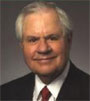
Bill Brewer works in a high-rise office, wears fine suits and lives in a Dallas mansion with nine bathrooms and six fireplaces -- the rewards for a lawyer called driven, tireless and an attorney who got his start in the region using "Rambo-style" tactics in the courtroom.
While he has taken on some of the region's highest profile and most lucrative cases, he has a soft spot for what he views as the underdog, most recently illegal immigrants.
At no cost to his clients, the 55-year-old Brewer has thrown the huge resources of his firm, Bickel & Brewer, behind court battles with Farmers Branch and Irving, cities that have taken strong stances against illegal immigration.
He believes that Texas needs to be more inclusive given the state's inevitable future of a Hispanic majority.
"How we are going to treat each other in the next decade and really for the rest of our time, it's really an issue that everyone should be thinking about," he said. "It is inappropriate for Farmers Branch or any other municipal government to try to push people who are peaceably within their borders out of their community merely because they don't want them there."
He frustrates his opponents, who see him as a roadblock to the will of most residents. To his clients, he's a determined advocate for good causes.
"He's an incredible person. He's really accessible. Everybody that works with him can tell you that," said Guillermo Ramos, a plaintiff in one of the Farmers Branch cases. "Once he and his law firm get behind something ... they all seem to be united, they all seem to back each other."
Local controversies
Like many on his side of the immigration debate, Brewer skips over the distinction between legal and illegal immigration and refers to Farmers Branch's actions as anti-Hispanic.
Farmers Branch City Council members have repeatedly and emphatically said their actions are aimed at illegal immigrants, not Hispanics.
The council voted unanimously in 2006 to ban illegal immigrants from renting apartments in Farmers Branch, a decision voters overwhelmingly endorsed in May. But the city cannot enforce the ban because of lawsuits, including Brewer's, filed in federal court. Brewer's suit represents Farmers Branch apartment owners and says the ban should be scrapped because it places unfair burdens on apartment owners, who must verify whether tenants are legal U.S. residents. Brewer also argues that the federal government -- not local governments -- should enforce immigration laws.
In the case, filed in state court with Ramos as the plaintiff, Brewer says that the council broke the Texas Open Meetings Act by holding closed-door meetings before it voted for the rental ban.
More recently, Irving has made national news for its Criminal Alien Program. The program, which refers suspected illegal immigrants in the Irving Jail to federal immigration authorities, has resulted in the deportation of more than 1,700 people since it began in September 2006.
The program sparked large anti-deportation demonstrations in September and October in Irving. Brewer quickly followed with a lawsuit against Irving aimed at forcing the city to elect council members by districts rather than the current practice of electing council members citywide. The districts, if created, would help Hispanics have a better chance of winning seats, he said.
Irving Mayor Herbert Gears said he does not know Brewer but believes that the Dallas lawyer's vision for Irving is wrong. Gears said single-member districts would not guarantee minority council members.
"If you dig further into the numbers, turnout is low in minority communities in Irving," he said.
'Rambo' tactics
Brewer usually takes on cases for the rich -- he charges $1,050 an hour. He's won many multimillion dollar verdicts, including a $115 million judgment for a breach of an office tower lease agreement.
He grew up in New York where he sometimes got to visit the United Nations because his dad had an office job there. He said his father encouraged him to read and later encouraged him to study law.
Brewer graduated from Albany Law School in New York in 1977 and is now on the school's board of trustees.
He practiced law in New York for several years before being recruited by a Dallas firm.
In 1984, he founded Bickel & Brewer in Dallas with John Bickel, a West Point graduate. Bickel & Brewer's reputation in its first few years was mostly for "bare knuckles litigation" and "Rambo" tactics, according to newspaper and law journal articles from the late 1980s.
A 1988 article in The Texas Lawyer cited depositions in which Brewer confronted other lawyers with comments such as, "Grow up, will you?" and "It's amazing to me that anybody would get out of law school and not know how to elicit this testimony."
The firm was known for incredible stubbornness, and some Dallas lawyers still complain bitterly in private about Bickel & Brewer's clients refusing to answer straightforward questions during depositions.
"Bickel & Brewer somewhat became the poster child for that practice of law. Now they're past that," said Fred Moss, a law professor at Southern Methodist University. "They haven't had that reputation for many years."
Despite court fines levied against Bickel & Brewer at the time, Brewer defended the firm's actions, saying that was how law was practiced then.
"When the process allowed lawyers to get aggressive with each other, they did," Brewer said in a recent interview at his firm's 48th floor offices in downtown Dallas.
'Relentless'
Brewer and his seven partners run a firm with 35 attorneys and pride themselves on "zealous advocacy" for their clients.
"He's probably one of the most intense individuals you have ever met," said Curtis Graves, an attorney who used to work at the firm.
Graves said Brewer demanded excellent work and sometimes showed an "explosive" temper to get it.
Stephen Hollern, a Fort Worth resident who worked with Brewer in 2002 on a case against Fort Worth's plans for a publicly funded hotel, thought Brewer had incredible energy and noticed that he had a small gym attached to his office.
Brewer lifts weights regularly, runs, rows and has a group over to his house every Monday night to play basketball.
Many who come to play are from the firm.
"They're persistent, they're relentless and they're committed to achieving results for their client," Dallas attorney Robert Witte said. "They play on a big stage. They have a reputation that in some ways is probably well-deserved."
While accustomed to handling multimillion-dollar cases, the firm opened a "storefront" in south Dallas in 1995 for people who could not afford legal services. Bickel & Brewer says it has offered more than $25 million in free legal services.
Dallas attorney Adelfa Callejo said that is why she recently approached Brewer about suing Irving.
"They take on these difficult cases, these very unpopular cases because Bill Brewer believes that he can make an impact in the community," she said. "These cases are very expensive to finance, but he's always been willing to take them on, and he has prevailed."
Attorney Kristi Motley directed the storefront in 2003 and said she never saw the firm turn away people looking for help.
Federal and state records show Brewer is a frequent campaign donor to Democrats and Republicans. He said he supports candidates based on their character.
He supported George Bush for president in 2000 and said he now supports Hillary Clinton.
Brewer said he wanted to debate attorney Tim O'Hare, the Farmers Branch City Council member who proposed the anti-illegal immigration measures, but O'Hare would not debate him.
O'Hare said he believes it would be unwise to debate someone who is suing his city, but declined further comment.
'I was wrong'
Brewer sometimes underestimates his opponents.
When his firm led a petition drive to put the Farmers Branch rental ban on the city ballot, he said, he was certain that voters would "overwhelmingly" strike down the ordinance.
But Farmers Branch residents voted by a 2-to-1 margin in favor of the rental ban.
"Why did I misread it? I was wrong. I misjudged our ability in that period of time to convert people from one point of view to another," Brewer said. "I also misjudged, to be honest with you, my own personal ability to carry that debate. ... I still believe we can convert a majority of people in that community."
Farmers Branch resident Tom Bohmier criticized Brewer's petition drive at the time, saying that people were not reading the full statement about the petition's purpose as required.
Bohmier said he still disagrees with Brewer and believes that the petition was mishandled. But he gained some respect for Brewer as he watched him from a distance.
"He's very charismatic. People see that he's a likeable guy," Bohmier said. "I wish he was on our side."
Online: www.bickelbrewer.com
High-profile cases
Attorney Bill Brewer and his firm Bickel & Brewer are well-known to many in North Texas for cases that affect local government and development.
Last year, Bickel & Brewer represented a terminal owner at Dallas Love Field, arguing that expanding the airport's passenger traffic derailed a pending sale of his client's terminal. The increased passenger traffic was allowed, but Brewer continues pressing the case in court. He says Dallas should pay his client, Love Field Terminal Partners, the value of the terminal -- $100 million -- when they seize it.
In 2002, the firm represented downtown Fort Worth hotels and led a petition drive against building a publicly funded hotel there. The petition prompted the Fort Worth City Council to scrap the idea.
Brewer successfully sued the Dallas school district in 2001 for violating the Texas Open Meetings Act. A judge found that the school board was illegally keeping the public from discussions about redistricting. Brewer released embarrassing transcripts of the closed meetings to the public. He said he intends to do the same if he beats Farmers Branch in his current lawsuit alleging that city's violation of the open meetings law. |
|
|
|
|
|
|
Douglas V. Bartman Joins McDonald Hopkins
Attorneys in the News |
2007/12/10 08:24
|
Douglas V. Bartman has joined
Cleveland-based McDonald Hopkins LLC as a Member in the firm's Litigation
Department. A practicing attorney for more than 14 years, Bartman focuses
his practice on employment, construction and commercial litigation.
Bartman counsels owners, developers, and contractors concerning
construction contracts, disputes during construction, and the litigation
and arbitration of construction claims after project completion. He defends
employers in state and federal courts and administrative agencies against
claims of federal and state labor law violations, including age, race,
disability, and sexual discrimination and harassment. In addition, Bartman
litigates other civil matters at the trial and appellate levels in both
state and federal courts. Beyond construction, Bartman represents clients
in a wide range of industries, such as manufacturing, healthcare, venture
capital, and retail.
"We are very pleased to have Doug Bartman join McDonald Hopkins," said
William J. O'Neill, managing member of the Litigation Department. "Doug's
experience in construction, employment and commercial litigation is an
excellent fit for our clients." A frequent speaker on employment issues to
employers across the country, Bartman is licensed in Ohio, Illinois and
California, and is a member of the American, California, Ohio, and
Cleveland Bar Associations. A 1989 graduate of the University of Michigan,
Bartman received his J.D. from the Hastings College of Law at the
University of California in 1993.
Douglas V. Bartman can be reached at 216.348.5839 or
dbartman@mcdonaldhopkins.com .
About McDonald Hopkins
With more than 130 attorneys in Cleveland, Chicago, Columbus, Detroit,
and West Palm Beach, McDonald Hopkins is a full-service firm focused on
business law, litigation, restructuring, and estate planning. The president
of McDonald Hopkins is Carl J. Grassi, who was elected in 2007. More
information about McDonald Hopkins can be found at http://www.mcdonaldhopkins.com |
|
|
|
|
|
|
Obituaries - James F. Graham, law firm partner
Attorneys in the News |
2007/12/02 07:44
|
| James F. Graham, 54, of Jenkintown, a defense litigation lawyer and a partner in Marshall, Dennehey, Warner, Coleman & Goggin, a firm for which he managed the Cherry Hill and Roseland, N.J., offices, died of lung cancer Nov. 17 at his home. "The lung cancer diagnosis in June came out of the blue," said Joe Santarone, a colleague and friend. "In his later years, Jim ran marathons. He smoked only for a while in the late 1970s, when he managed his grandfather's pub in the Northeast, Graham's Pub." Mr. Graham was born in the Summerdale section of Northeast Philadelphia into a tight-knit family of six children. He graduated from Father Judge High School in 1971. After he married Susan Weitzman in 1975, the couple moved to San Diego, where he earned a bachelor's degree in 1985 from the University of California. They moved to Jenkintown, and Mr. Graham earned a law degree in 1988 from Widener University. He then joined Marshall Dennehey. For years, he opened and managed offices for the firm in Western Pennsylvania, New Jersey, Delaware, Ohio and Florida, a total of 18. Since 2002, Mr. Graham had managed the Cherry Hill office with 100 employees and the Roseland office in North Jersey. The Philadelphia Business Journal reported that the firm, with 380 lawyers, was the fastest growing in the Philadelphia region in the 1990s. For two decades, Marshall Dennehey handled general liability cases, such as truck accidents, for Philadelphia Newspapers Inc., which formerly published The Inquirer. "My father was a generous, big-hearted man," said his son, Colin, a second lieutenant in the Marines stationed in Japan. "When I played rugby at Catholic University, at least twice a week he jumped in his car to drive to D.C. for games. Then he took the whole team of 25 guys out to dinner." Mr. Graham was unpretentious and often gave anonymously to those in need. "He gave money to a homeless man in Center City, and then took him to a shoe store and bought him a nice pair of shoes," his son said. "Literally hundreds of friends came to his funeral services," Santarone said. "I gave the eulogy, and it was the hardest closing I ever had to do." In addition to his son and wife, Mr. Graham is survived by a daughter, Susan Graham, a brother, and four sisters. A Funeral Mass was said Nov. 24. Donations may be sent to the Breathing Room Foundation, Box 287, Jenkintown, Pa. 19046. |
|
|
|
|
|
|
Leading Attorney Pleads Guilty to Receiving Kickbacks
Attorneys in the News |
2007/10/30 12:13
|
William Lerach, the shareholder lawsuit lawyer who was once called the “most hated man in high tech,” pleaded guilty yesterday to a conspiracy charge for his role in an illegal scheme to pay people to become plaintiffs in shareholder complaints.
Lerach, 61, of San Diego became the eighth person to plead guilty in connection with a seven-year investigation into the conduct of his former law firm, Milberg Weiss, prosecutors said.
Flanked by his lawyers, Lerach stood in court with his left elbow propped up on a lectern. He answered questions from U.S. District Judge John Walter in a firm voice.
“Guilty, your honor,” Lerach said when Walter asked how he would plead.
A sentencing hearing was set for Jan. 14. Under terms of the plea agreement Lerach struck with prosecutors last month, he faces a sentence of one to two years in prison. But Walter does not have to follow the agreement's terms.
Lerach also agreed to forfeit $7.75 million to the government and pay a $250,000 fine.
Walter told Lerach that he could lose his law license. The lawyer said he understood.
As the hearing broke up, Lerach walked over to the three federal prosecutors in the Milberg Weiss investigation and shook their hands. He shared a laugh with Assistant U.S. Attorney Robert McGahan.
Outside of court, Lerach's lawyer John Keker said he had no comment.
The New York-based Milberg Weiss firm, its co-founder Melvyn Weiss and Palm Springs lawyer Paul Selzer face trial next year in connection with the probe. The firm and Weiss have pleaded not guilty. Selzer's lawyer and prosecutors have said they are trying to reach a plea agreement.
Lerach is the third of three former Milberg Weiss partners to plead guilty in the investigation. David Bershad and Steven Schulman entered their pleas earlier this year and are cooperating with prosecutors.
Under terms of Lerach's plea agreement, he is not required to cooperate.
Lerach joined Milberg Weiss in 1976 and headed its West Coast operation. In 2004, he quit and started his own practice. Just before striking his deal with prosecutors, Lerach announced his retirement from the firm now known as Coughlin Stoia Geller Rudman & Robbins. Prosecutors agreed they would not charge Coughlin Stoia in the Milberg Weiss probe under terms of the plea deal.
Over the past two decades, Lerach has gained notoriety for filing class-action lawsuits against companies that saw their stock prices plummet. In the 1990s, such fraud lawsuits often involved high-tech companies.
Prosecutors contend that in some cases Milberg Weiss gamed the judicial system to its benefit.
The charges contend that Weiss and others helped steer secret payments to people who agreed to serve as plaintiffs in class-action lawsuits. Across the country, the firm had a string of these paid clients at the ready, which allowed Milberg Weiss to be the first to file class-action lawsuits. By being first, Milberg stood a good chance of receiving the lion's share of attorney fees when the cases were resolved.
Under the law, the lead plaintiff in a class-action shareholder suit must serve as a representative of the class and cannot have a special interest or hidden inducement beyond other shareholders in the case.
Prosecutors said Lerach and others, by participating in the secret payment scheme, betrayed their fiduciary duties of loyalty, honesty and trust to their other clients. If the secret payments had been uncovered, prosecutors said, judges overseeing the cases could have disqualified the law firm from serving in the case.
Lerach acknowledged making secret payments to plaintiff Steven Cooperman, 64, and stated that other plaintiffs received payments from other Milberg Weiss partners, typically 10 percent of the fees the firm received.
Lerach and his family have contributed heavily to political campaigns in the past two decades. He once hosted a fundraising event for former President Clinton at Lerach's Rancho Santa Fe home.
Among the current pack of presidential candidates, Lerach has contributed to Democratic presidential contender John Edwards' campaign. But officials with the former U.S. senator have said they gave the $4,600 donation to charity after Lerach's plea agreement became public. |
|
|
|
|
|
|
Wayne Johnson Appointed Chair-Elect of CA's Bar Tax Section
Attorneys in the News |
2007/09/28 12:13
|
| Valensi Rose, PLC is pleased to announce that Wayne R. Johnson has been appointed chair-elect of the California State Bar's Taxation Section Executive Committee. His term as chair-elect will run from September 30, 2007 through September 28, 2008, at which time he will become chair of the Taxation Section. "I'm truly honored to have been appointed to this position, and I hope it will allow me to promote the Section's interests even more," said Johnson, a partner at Valensi Rose. "I believe strongly in the Section's purpose and goals, and look forward to the opportunity to continue my service to the Taxation Section." "The firm has always encouraged active involvement in the community, from nonprofits to public policy," said Arlen Gunner, managing partner of Valensi Rose. "We congratulate Wayne on his appointment, and applaud him for continuing our firm's dedication to the community and to the profession." The Taxation Section is California's only statewide tax bar association. The Taxation Section's current membership is approximately 3,000. In addition to his involvement with the California Taxation Section, Johnson currently serves as Chairman of the Board of the Los Angeles Chapter of The Make-A-Wish Foundation. Johnson represents high net-worth individuals in planning their business and personal affairs. Prior to practicing law, Johnson was a public accountant. He holds a masters' degree in taxation law from New York University School of Law. Johnson earned his law degree from the University of North Dakota School of Law. Law and Politics Magazine and Los Angeles Magazine named Johnson a "Rising Star" among Southern California lawyers in each of 2004, 2005 and 2006. The Rising Star designation is awarded to attorneys who are 40 years of age and under - or have been practicing law for 10 years or less - who have shown themselves to be among the very best young lawyers practicing in Southern California. Johnson is one of only a hand-full of Southern California tax attorneys to be awarded this distinction. |
|
|
|
|
|
|
Quarles & Brady chairman Ryan dies at 63
Attorneys in the News |
2007/08/24 04:58
|
Patrick Ryan, the chairman and managing partner of the law firm Quarles & Brady LLP, died Wednesday at the age of 63 after a brief illness, the firm has announced. Ryan joined Quarles & Brady in Milwaukee in 1970 after graduating from Marquette University Law School, where he served as editor-in chief of the Law Review. His practice at Quarles included extensive experience in private equity, capital markets transactions, acquisitions and commercial lending, particularly in the paper industry. He was elected as the firm's managing partner in 2002 and had been involved with the management side of Quarles & Brady since 1985. In a tribute on its Web site, the firm credits Ryan with helping to build a distinguished practice by providing knowledgeable legal counsel and a high level of personal service to a variety of corporate clients. Under his leadership as chairman and managing partner, the firm has grown to its current size of approximately 440 attorneys and 520 support staff in six offices in Wisconsin, Illinois, Arizona and Florida. It was ranked by the National Law Journal as the 95th largest law firm in the nation in 2006. Ryan is survived by his wife, Holly, and their four children and son-in-law: Brendan, Lucas, Abigail, Rebeccah and her husband Keith Martin. In addition, he had great pride in his five grandchildren: Joseph and Henry Martin, Daijah and Calia Stanley, and Beyonce Williams. In lieu of flowers, contributions can be made to Marquette University Law School-Patrick M. Ryan Scholarship Fund designed to assist minority law students at Marquette University. |
|
|
|
|
|
|
Former TX Supreme Court Chief Justice John Hill dies
Attorneys in the News |
2007/07/10 08:01
|
| John Hill, the only person in state history to serve as secretary of state, attorney general and chief justice of the Texas Supreme Court, died Monday. He was 83. He died of a heart condition around 9:45 a.m. at a Houston hospital, said a spokeswoman for his law firm. "He was a man of enormous integrity, great moral courag, and deep commitment to law and justice," President Bush said. "Laura and I join John's family and friends and all Texans in mourning the loss of a devoted statesman." In 1978, Hill ran for governor and defeated incumbent Gov. Dolph Briscoe for the Democratic nomination. But Hill became the first Democrat in 100 years to lose the gubernatorial election, falling to Dallas millionaire Bill Clements, a Republican. The loss was not the end of Hill's career in public service. After several years as a behind-the-scenes player in state politics, Hill was elected to a four-year term as chief justice of the Texas Supreme Court in 1984. He resigned before his term ended to begin an unsuccessful crusade to reduce political pressure on the judicial branch by ending the system in which voters elect judges in Texas. Hill continued to push for reforms even after he no longer held public office. "His retirement from public service was no retirement at all, because he continued to advocate for a method of judicial selection that would assure trust and confidence in our judiciary," Chief Justice Wallace B. Jefferson said. The setbacks never seemed to discourage Hill, said former Texas Supreme Court Justice Craig T. Enoch. "He fits the mold of legendary lawyers in Texas," he said. "I never saw something that would eat at him anyway," Enoch added. "It illustrates a depth to this person far beyond whether he won or lost a particular election." Hill was born Oct. 9, 1923, in Breckenridge. He later said he "could have outdone Abe Lincoln in terms of the smallness of the house in which I was born." He spent a year at Kilgore Junior College, where he won a national debate championship, and then went on to the University of Texas at Austin, where he graduated from law school and met his wife, Elizabeth "Bitsy" Graham. After serving in the Navy during World War II, Hill became a lawyer. He built his reputation by winning large awards for the families of passengers who died in plane crashes in Texas. He was secretary of state from 1966-68, after helping Gov. John Connally get elected. In 1972, he won an election for attorney general by 100,000 votes. After the failed gubernatorial run and his stint on the state Supreme Court, Hill returned to private practice. Gov. George W. Bush appointed Hill to the three-member Texas Lottery Commission in 1997. Since 2005, Hill had been a partner in the Houston office of the law firm Winstead PC. Gov. Rick Perry ordered flags flown at half-staff through Saturday. "John Hill represented all that is good about politics and public service," former U.S. Secretary of State James A. Baker III said. "I have been privileged to have been involved in political efforts both with John Hill and against him, and believe me, it was better to be with him." Texas' two senators also released statements acknowledging Hill's impact on state politics and the judicial system. "He was dynamic, witty, compassionate and always a gentleman," said Sen. John Cornyn, a former state attorney general and Texas Supreme Court justice. "He generated respect and admiration among his fellow Texans that transcended partisan politics." Sen. Kay Bailey Hutchison said, "The state of Texas owes him and his family a debt of gratitude." Hill is survived by his wife; three children, Melinda Elizabeth Hill Perrin, John Graham Hill and Judge Martha Hill Jamison; 10 grandchildren; and two great-grandchildren. Services are scheduled for 1 p.m. Friday at St. Luke's United Methodist Church in Houston. |
|
|
|
|
|
|
Class action or a representative action is a form of lawsuit in which a large group of people collectively bring a claim to court and/or in which a class of defendants is being sued. This form of collective lawsuit originated in the United States and is still predominantly a U.S. phenomenon, at least the U.S. variant of it. In the United States federal courts, class actions are governed by Federal Rules of Civil Procedure Rule. Since 1938, many states have adopted rules similar to the FRCP. However, some states like California have civil procedure systems which deviate significantly from the federal rules; the California Codes provide for four separate types of class actions. As a result, there are two separate treatises devoted solely to the complex topic of California class actions. Some states, such as Virginia, do not provide for any class actions, while others, such as New York, limit the types of claims that may be brought as class actions. They can construct your law firm a brand new website and help you redesign your existing law firm site to secure your place in the internet. |
Law Firm Directory
|
|


 Legal News RSS Feed