|
|
|
Nano-Tech Solutions to Detect Cancer Developed
Biotech |
2006/12/25 20:14
|
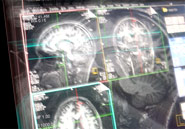
| A team of Korean scientists said they have developed a technology to use nano-particles to draw clinical images of cells involved in cancer, which could bring a breakthrough in the early detection of the disease. Researchers led by Cheon Jin-woo and Seo Jin-seok said in a paper published on the Internet site of Nature Medicine on Monday that their new technology allowed magnetic resonance imaging (MRI) scans to find cancer cells less than 2 millimeters in size. Conventional MRI tests could only distinguish cells of a larger size, which are found only after the cancer is further developed. A nano-particle is a microscopic particle whose size is measured in nanometers, or one billionth of a meter. Recent scientific research has proved nano-particles to be useful in detecting tumors due to their abilities to act as imaging agents and make cells and tissues more visible in MRI scans. The nano-particles developed by the Korean researchers could be swallowed like a pill or injected through a catheter into the human body. Their function is to detect cancer and other diseases in their early developmental stages. Among the commonly used nano-particles in MRI imaging is CLIO, which was developed by scientists at Harvard University. In their paper in Nature Medicine, the Korean scientists claimed that their new nano-device performed better than CLIO in MRI experiments, generating a signal that was about 10 times more intense.
|
|
|
|
|
|
|
Australian Senate lifts therapeutic cloning ban
Biotech |
2006/11/08 09:27
|
The Australian Senate voted Tuesday to lift restrictions on stem cell research and permit the therapeutic cloning of human embryos. By a 34-32 vote, lawmakers approved the Prohibition of Human Cloning for Reproduction and the Regulation of Human Embryo Research Amendment Bill 2006, which also includes stricter penalties of up to 15 years in prison for anyone convicted of attempting to buy human egg, sperm or embryo faces. Australia's parliament voted in 2002 to allow researchers to extract stem cells from extra embryos originally intended for use in in vitro fertilization, but did not permit the use of those cells in cloning. The Australian House of Representatives will consider the latest legislation later this month. |
|
|
|
|
|
|
Class action or a representative action is a form of lawsuit in which a large group of people collectively bring a claim to court and/or in which a class of defendants is being sued. This form of collective lawsuit originated in the United States and is still predominantly a U.S. phenomenon, at least the U.S. variant of it. In the United States federal courts, class actions are governed by Federal Rules of Civil Procedure Rule. Since 1938, many states have adopted rules similar to the FRCP. However, some states like California have civil procedure systems which deviate significantly from the federal rules; the California Codes provide for four separate types of class actions. As a result, there are two separate treatises devoted solely to the complex topic of California class actions. Some states, such as Virginia, do not provide for any class actions, while others, such as New York, limit the types of claims that may be brought as class actions. They can construct your law firm a brand new website and help you redesign your existing law firm site to secure your place in the internet. |
Law Firm Directory
|
|


 Legal News RSS Feed